Warwick Valley Veterinary Hospital

75 Belcher Road

Warwick, NY 10990 US

845-986-5678

Open mobile navigation
  • Home
  • New Patient Center
    • Online Forms
    • What to Expect
    • Veterinary Resources
    • Payment Options
  • About Us
    • Meet Our Team
    • Services
    • Virtual Office Tour
  • Contact Us
  • Pet Corner
  • Emergencies
  • Rebates and Rewards
  • Online Pharmacy
  • Veterinary Topics
    • Pet Health
      • Chronic Conditions
      • Digestive and Oral Health
      • Diseases and Viruses
      • Pests and Parasites
      • Orthopedics
    • Today's Veterinarian
    • Choosing Your Pet
      • Cats
      • Dogs
    • Living With Your Pet
      • Bringing Your Pet Home
      • Children and Pets
      • Providing Care
      • Travel
      • Saying Goodbye
    • Newsletter Library
      • Cats
      • Tips for Pet Owners
      • Behavior & Training
      • Fleas & Parasites
      • Keeping Pets Healthy
      • Recognizing Illness
      • Nutrition & Food
      • Pet Dangers
      • Seasonal Topics
      • Visiting the Vet
      • Newsletter Archive
        • Fun with Pets
        • Unbelievable Pets
    • Video Newsroom
      • Health Topics
      • Technology and Science
      • Other Interests
  • Careers
  • Home >
  • Articles >
  • Newsletter Library >
  • Behavior & Training >
  • Cats >
  • Is Your Cat's Personality Influenced by Coat Color?

Is Your Cat's Personality Influenced by Coat Color?

  • Created in Newsletter Library, Behavior & Training, Newsletter Library, Cats
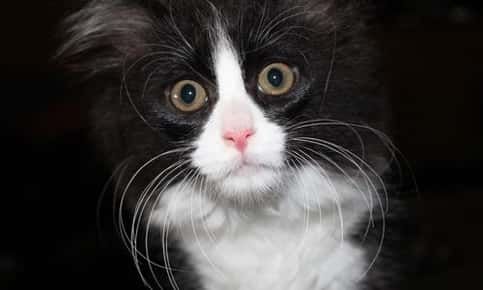
Image of a black and white cat.

Can you tell if a cat will be friendly, aggressive or laid-back simply by taking a quick look at its color? That question has perplexed cat owners and scientists alike for years. Although it's possible that coat color may play a role in personality, it's also important to consider other factors when you're considering adding a new kitty to your home.

Does Color Play a Role?

Since cats are never going to answer that question, scientists turned to pet owners for their input. University of California, Berkeley researchers surveyed 189 cat owners in a study published in the October 2012 edition of Anthrozoos. Orange cats were regarded as the friendliest by respondents, while white cats were labeled aloof, and tortoiseshell cats were thought to have too much "attitude."

The subject was revisited in a University of California Davis study a few years later. This time, results were tabulated from 1,274 completed surveys. The surveys asked cat owners to rate their pets' level of aggression at home, while being handled and during veterinary visits.

The most aggressive cats in all three settings were females with gray-and-white, black-and-white or orange coats and calico cats. Gray-and-white cats exhibited the highest levels of aggression during visits to the vet. The survey also revealed that black-and-white cats were most likely to react negatively when handled, while calicos were more likely to become irritated. Black, white, gray and tabby cats were rated lowest on the aggression scale.

Although these studies offer some interesting information, they don't provide a definitive answer regarding whether certain personality traits are associated with specific coat colors. Respondents provided answers based on their particular experiences. It's possible that what one person viewed as aggressive behavior was regarded as playfulness by another.

You probably noticed that cat owners in the University of California, Berkeley study thought orange cats were the friendliest, while respondents in the University of California, Davis study added the felines to the "most aggressive" category. Because cats have distinct personalities, just as people do, it's not surprising that there were differences in opinion between the two studies.

What Factors Influence Personality?

Your cat's early life plays an important role in the development of his or her personality. Kittens don't develop a fear of humans if they interact with people between the ages of 3 and 9 weeks, according to the American Association of Feline Practitioners. If socialization with humans is delayed, kittens can become fearful or timid cats. In some cases, they'll eventually overcome their fears, but may still be a little uncomfortable around strangers.

Cats also inherit traits from their parents. If one or both parents are laid-back and friendly, their kittens may also possess those traits. Similarly, cats that are timid or jumpy, despite socializing with people when they were kittens, may have inherited the behavior from a parent.

Other factors may also play a role in the perception of a cat's personality. For example, some of the white cats labeled "aloof" by University of California, Berkeley survey respondents may actually have hearing problems. Sixty-five to 85 percent of white cats with two blue eyes are deaf, 40 percent of white cats with one blue eye are deaf, and 17 to 22 percent of white cats without blue eyes are deaf, according to Cornell University College of Veterinary Medicine.

Some white cats affected by hearing loss may only be deaf in one ear. Although cats with partial hearing loss may seem perfectly fine, they may have difficulty hearing you when you call to them from a different room or might not respond if you speak into their bad ear. If you're not aware that these cats have hearing problems, you might assume that they aren't very friendly.

Whether your pet's disposition is related to coat color, socialization, inherited traits or other factors, you're probably glad that your furry friend has his or her own unique personality. We help cats of all colors stay happy and healthy. If you're concerned about a behavioral or health issue, give us a call to schedule an appointment.

Sources:

Journal of Applied Animal Welfare Science: The Relationship Between Coat Color and Aggressive Behaviors in the Domestic Cat, 10/14/15

http://www.tandfonline.com/doi/abs/10.1080/10888705.2015.1081820?journalCode=haaw20#abstract

Tech Times: Cat Color May Hint How Aggressive It Is: Felines with Black, White or Gray Fur Make Best Pets, 10/26/15

http://www.techtimes.com/articles/99474/20151026/cat-color-may-hint-how-aggressive-it-is-felines-with-black-white-or-gray-fur-make-best-pet.htm

Berkeley News: Don’t be so fast to judge a cat by its color, study warns, 10/13/12

http://news.berkeley.edu/2012/10/23/cat-color/

American Association of Feline Practitioners: Feline Behavior Guidelines, 2004

https://www.catvets.com/public/PDFs/PracticeGuidelines/FelineBehaviorGLS.pdf

Cornell University College of Veterinary Medicine: Ask Elizabeth

https://www.vet.cornell.edu/departments-centers-and-institutes/cornell-feline-health-center/health-information/feline-health-topics/ask-elizabeth-white-cats-and-blindnessdeafness

Manual of Clinical Behavioral Medicine for Dogs and Cats

https://books.google.com/books?id=HHoK9PKpqn4C&pg=PA319&lpg=PA319&dq=how+lack+of+nutrition+as+a+kitten+shapes+behavior&source=bl&ots=7u1iAUnIZt&sig=3h0_pXD6iwFIuxo2E2KgyF3yTIs&hl=en&sa=X&ved=0ahUKEwjNiNTH_LTXAhWb14MKHfFYBnsQ6AEINzAD#v=onepage&q=how%20lack%20of%20nutrition%20as%20a%20kitten%20shapes%20behavior&f=false

  • Pet Health
    • Chronic Conditions
    • Digestive and Oral Health
    • Diseases and Viruses
    • Pests and Parasites
    • Orthopedics
  • Today's Veterinarian
  • Choosing Your Pet
    • Cats
    • Dogs
  • Living With Your Pet
    • Bringing Your Pet Home
    • Children and Pets
    • Providing Care
    • Travel
    • Saying Goodbye
  • Newsletter Library
    • Cats
    • Tips for Pet Owners
    • Behavior & Training
    • Fleas & Parasites
    • Keeping Pets Healthy
    • Recognizing Illness
    • Nutrition & Food
    • Pet Dangers
    • Seasonal Topics
    • Visiting the Vet
    • Newsletter Archive
      • Fun with Pets
      • Unbelievable Pets
  • Video Newsroom
    • Health Topics
    • Technology and Science
    • Other Interests


After Hours Emergency

Guardian Veterinary Emergency is open and ready to help. The clinic is equipped with on site laboratory instruments and x-ray facilities. Located in Middletown on route 211, opposite the Galleria. Their phone number is 845-692-0260

Featured Articles

Read about interesting topics

    March Newsletter: How to Keep Your Cat Safe When Outdoors

    Wondering how your cat can safely spend time outdoors? ...

    Read More

    March Newsletter: How to Choose Safe Blankets for Pets

    Do you know how to pick a safe blanket for your pet? ...

    Read More

    February Newsletter: How to Reduce Dental Anxiety in Pets

    Does your pet hate toothbrushing? These tips could reduce dental anxiety. ...

    Read More

    February Newsletter: How to Safely Change Your Cat’s Food

    Buying a new food for your cat? Find out how to switch foods safely. ...

    Read More

    January Newsletter: Signs Your Pet Needs a Wellness Exam

    Does your pet need a wellness exam? ...

    Read More

    January Newsletter: How Your Veterinarian Can Help If Your Pet Ingests Something Toxic

    Has your pet eaten something it shouldn't have? Find out how your vet can help. ...

    Read More

    December Newsletter: Signs Your Pet Needs a Professional Cleaning

    Do you know when your pet needs a professional cleaning? ...

    Read More

    December Newsletter: Simple Ways to Keep Your Home Flea-Free for Your Pet’s Well-being

    Never want to see another flea again? Try these tips for a flea-free home. ...

    Read More

    November Newsletter: The Importance of Bloodwork for Your Pet’s Health

    Wondering if your pet really needs bloodwork? Find out the benefits of blood tests for your furry friend. ...

    Read More

    November Newsletter: Turkey Day Tips for Pet Owners

    Don't forget about your pet when making Turkey Day preparations. ...

    Read More

Connect With Us

  • Copyright © 2026 MH Sub I, LLC dba iMatrix.
  • Admin Log In
  • Site Map