Warwick Valley Veterinary Hospital

75 Belcher Road

Warwick, NY 10990 US

845-986-5678

Open mobile navigation
  • Home
  • New Patient Center
    • Online Forms
    • What to Expect
    • Veterinary Resources
    • Payment Options
  • About Us
    • Meet Our Team
    • Services
    • Virtual Office Tour
  • Contact Us
  • Pet Corner
  • Emergencies
  • Rebates and Rewards
  • Online Pharmacy
  • Veterinary Topics
    • Pet Health
      • Chronic Conditions
      • Digestive and Oral Health
      • Diseases and Viruses
      • Pests and Parasites
      • Orthopedics
    • Today's Veterinarian
    • Choosing Your Pet
      • Cats
      • Dogs
    • Living With Your Pet
      • Bringing Your Pet Home
      • Children and Pets
      • Providing Care
      • Travel
      • Saying Goodbye
    • Newsletter Library
      • Cats
      • Tips for Pet Owners
      • Behavior & Training
      • Fleas & Parasites
      • Keeping Pets Healthy
      • Recognizing Illness
      • Nutrition & Food
      • Pet Dangers
      • Seasonal Topics
      • Visiting the Vet
      • Newsletter Archive
        • Fun with Pets
        • Unbelievable Pets
    • Video Newsroom
      • Health Topics
      • Technology and Science
      • Other Interests
  • Careers
  • Home >
  • Articles >
  • Feline >
  • Pet Health >
  • Digestive and Oral Health >
  • Feline Stomatitis: Treatments

Feline Stomatitis: Treatments

  • Created in Feline, Pet Health, Digestive and Oral Health

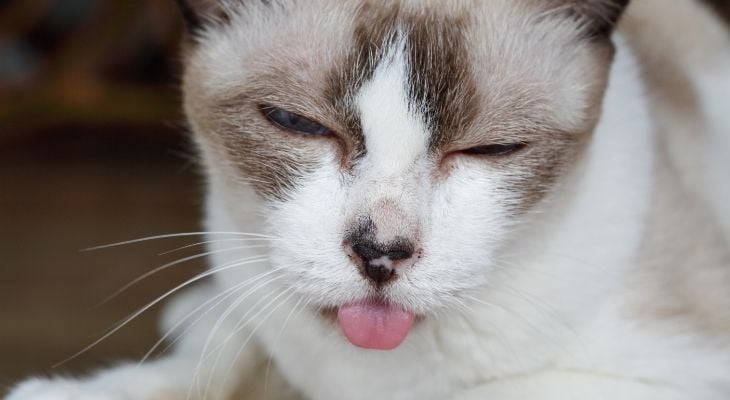
sick looking cat
Cats rarely display their pain, but cats with feline stomatitis are often the exception. If your cat appears to have mouth pain, is reluctant to eat, doesn't want to groom, is drooling, and doesn't want you to open its mouth, it may be suffering from this debilitating, degenerative oral condition, and prompt treatment is a must.

Stomatitis refers to an inflammation of the oral mucosa, the mucous membranes that line a cat's mouth. This layer of cells can become inflamed for a variety of reasons. The more frequent causes of inflammation are gingivitis and periodontal disease. In the case of stomatitis, the exact cause isn't known, but it is suspected to be an immune-mediated disease. Depending on the extent of lesions, this condition is also called faucitis and caudal mucositis, if the areas in the back of the mouth behind the teeth are affected. Stomatitis affects all breeds of cats, and can occur in any age.

Treatment for oral inflammation depends on the severity of the disease. Milder cases can be treated by having a dental prophylaxis under anesthesia. Once the teeth are cleaned, you may be asked to apply a chlorhexidene gel to help keep the bacteria under control. Taking dental X-rays is important in all these cases as a degeneration of the tooth termed resorption, may occur in the crown or root of the tooth. This resorption can cause pain and inflammation.

More advanced cases of feline stomatitis generally call for extraction of all or a majority of the affected teeth. While this approach might sound extreme, it can also be highly effective at curing the stomatitis altogether, instead of merely keeping it in check. If extractions of the molars and pre-molars doesn't resolve the problem, further extractions of the canines and incisors very well might. Some cat owners decide to spare their cats a possible future surgery by having these teeth removed with the others. X-rays of the teeth during extraction are critical because any piece of a tooth is left behind, the inflammation will persist.

Your cat's stomatitis may also involve the bone surrounding the teeth, leading to a condition called osteomyelitis. This is a serious infection of the bone surrounding the teeth which is treated by removing the diseased bone and then allowing healthy tissue to regenerate in its place.


Sources:

Deforge, D. H., VMD, "One Clinician’s Experience With A New Treatment For Feline Stomatitis," Veterinary Practice News

Kirby, Naomi, DVM, MS, "Managing Feline Stomatitis," IVC Journal.

Lews, John, VMD, FAVD, DIPL. AVDC., "Why Teeth Removal is Best When Your Patient Has Feline Stomatitis," Veterinary Practice News.

Merck Veterinary Manuals, "Oral Inflammatory and Ulcerative Disease in Small Animals."

  • Pet Health
    • Chronic Conditions
    • Digestive and Oral Health
    • Diseases and Viruses
    • Pests and Parasites
    • Orthopedics
  • Today's Veterinarian
  • Choosing Your Pet
    • Cats
    • Dogs
  • Living With Your Pet
    • Bringing Your Pet Home
    • Children and Pets
    • Providing Care
    • Travel
    • Saying Goodbye
  • Newsletter Library
    • Cats
    • Tips for Pet Owners
    • Behavior & Training
    • Fleas & Parasites
    • Keeping Pets Healthy
    • Recognizing Illness
    • Nutrition & Food
    • Pet Dangers
    • Seasonal Topics
    • Visiting the Vet
    • Newsletter Archive
      • Fun with Pets
      • Unbelievable Pets
  • Video Newsroom
    • Health Topics
    • Technology and Science
    • Other Interests


After Hours Emergency

Guardian Veterinary Emergency is open and ready to help. The clinic is equipped with on site laboratory instruments and x-ray facilities. Located in Middletown on route 211, opposite the Galleria. Their phone number is 845-692-0260

Featured Articles

Read about interesting topics

    March Newsletter: How to Keep Your Cat Safe When Outdoors

    Wondering how your cat can safely spend time outdoors? ...

    Read More

    March Newsletter: How to Choose Safe Blankets for Pets

    Do you know how to pick a safe blanket for your pet? ...

    Read More

    February Newsletter: How to Reduce Dental Anxiety in Pets

    Does your pet hate toothbrushing? These tips could reduce dental anxiety. ...

    Read More

    February Newsletter: How to Safely Change Your Cat’s Food

    Buying a new food for your cat? Find out how to switch foods safely. ...

    Read More

    January Newsletter: Signs Your Pet Needs a Wellness Exam

    Does your pet need a wellness exam? ...

    Read More

    January Newsletter: How Your Veterinarian Can Help If Your Pet Ingests Something Toxic

    Has your pet eaten something it shouldn't have? Find out how your vet can help. ...

    Read More

    December Newsletter: Signs Your Pet Needs a Professional Cleaning

    Do you know when your pet needs a professional cleaning? ...

    Read More

    December Newsletter: Simple Ways to Keep Your Home Flea-Free for Your Pet’s Well-being

    Never want to see another flea again? Try these tips for a flea-free home. ...

    Read More

    November Newsletter: The Importance of Bloodwork for Your Pet’s Health

    Wondering if your pet really needs bloodwork? Find out the benefits of blood tests for your furry friend. ...

    Read More

    November Newsletter: Turkey Day Tips for Pet Owners

    Don't forget about your pet when making Turkey Day preparations. ...

    Read More

Connect With Us

  • Copyright © 2026 MH Sub I, LLC dba iMatrix.
  • Admin Log In
  • Site Map